Summary
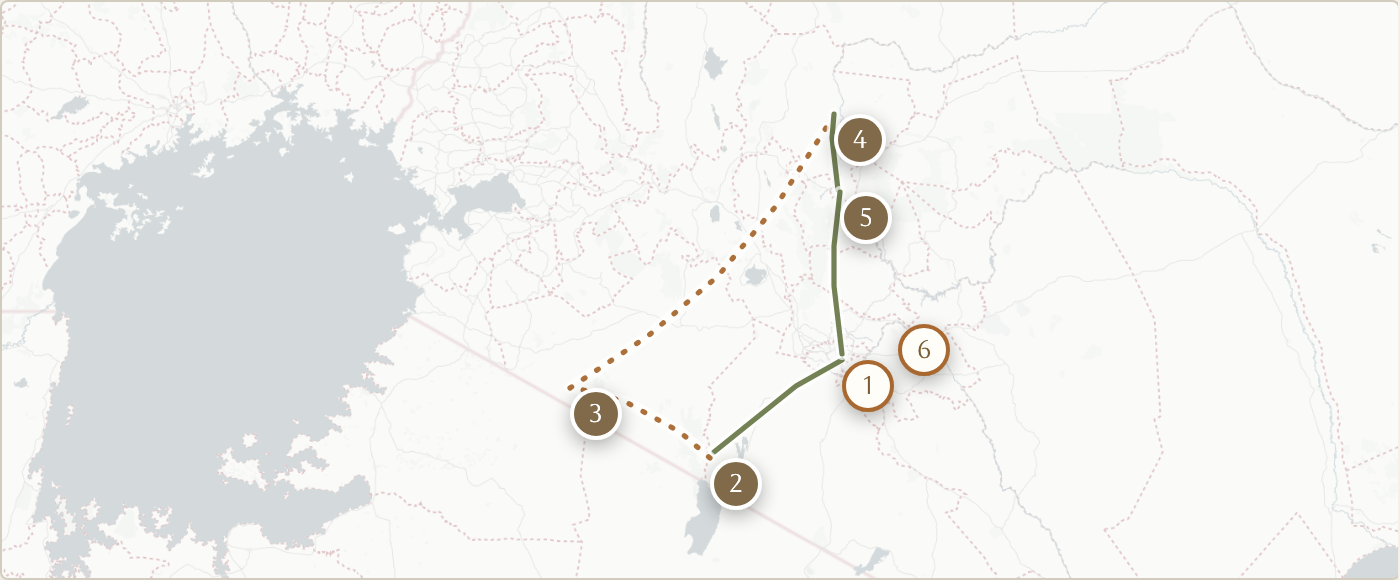
12 nights — 1 night Nairobi, 2 nights Shompole, 5 nights Maasai Mara, 2 nights Laikipia, 2 nights Solio.
This is the trip I put together when someone asks to see the best of what Kenya has to offer in a single journey. It is a small, privately-guided group, built around light and time at the sightings rather than ticking off a list. We move between five very different places — a Rift Valley night-hide, the open plains of the Mara, the forests of Laikipia and the rhino country of Solio — and in each one the aim is the same: to be in the right spot, early, and to wait.
Itinerary
Crowne Plaza - Nairobi Airport
We meet on arrival and transfer to our hotel for the night. A quiet start — a chance to rest, check kit and talk through the days ahead before we head into the field.
Shompole Wilderness
We fly south to Shompole, in the Great Rift Valley, for two nights of night-hide photography. This is where the quieter, more elusive animals come in close after dark — caracal, striped hyena, serval, the occasional leopard — photographed at eye level from a sunken hide. There is the option of a flight over Lakes Magadi and Natron, where the flamingoes and mineral patterns make for some of the most abstract images of the whole trip.
Mlima Mara
Five nights at MLIMA Mara, our own camp, in the heart of big-cat country. The Mara needs little introduction — lion, cheetah and leopard on open ground, with the plains game around them — but five nights is what lets us stop chasing and start working a sighting properly: returning to the same animals, learning their habits, and being there when the light does something worth photographing.
Laikipia Wilderness Camp
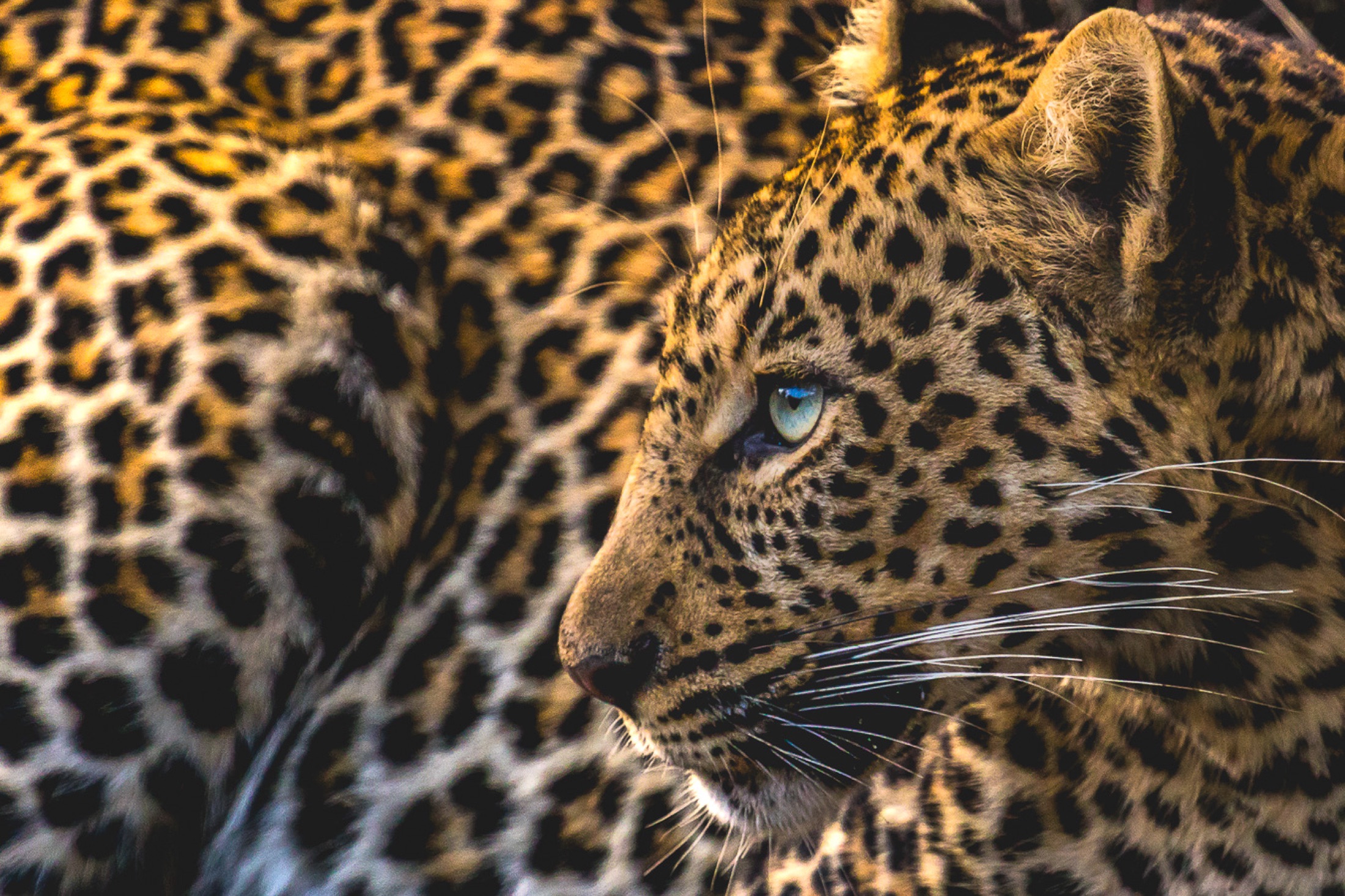
We fly north to Laikipia Wilderness for two nights. This is the home of the melanistic black leopard, alongside wild dog and a long list of other species across a private conservancy where we can be off-road and out after dark — both of which matter for the animals we are here to find.
Rhino Watch Lodge
We drive to Solio for our final two nights — one of the best places anywhere to photograph black and white rhino at close range, in open country and good light.
Kibo Safari Camp
We drive on to Amboseli for two nights, under Kilimanjaro, where the draw is the big tuskers — the last of the great long-tusked bulls, photographed against the mountain on the mornings it clears. We work the dry lake bed as the elephant families cross to the marsh in the heat of the day, and spend time in the private conservancies alongside the main reserve, where we can position for the light rather than the crowd.
Ashnil Samburu
We drive on to Samburu for two nights, on the Ewaso Nyiro in Kenya's dry north, for a cast of species found almost nowhere else — Grevy's zebra, reticulated giraffe, gerenuk, Beisa oryx, Somali ostrich and vulturine guineafowl. The red earth and doum palms give a completely different palette to the green plains further south, which is exactly why it is worth the detour.
After a final morning at Solio, we make the road transfer back to Nairobi — arriving in good time to connect with onward international flights home.
Photography notes
This trip asks a lot of your kit because the five places each shoot differently. On the open ground of the Mara and the rhino country at Solio, a 100-400mm or a fast 500-600mm is the workhorse: from a vehicle with a beanbag over the door you can fill the frame on a resting cat or a rhino, but the pictures I care about — a cheetah on a termite mound with the plains falling away behind, an elephant herd small under a big sky — need you to come off the long end, so keep a 24-70mm or a 70-200mm on a second body and be ready to switch fast. We work almost entirely from the vehicle and almost entirely at the edges of the day. First light and the last hour before dark are when the low, warm side-light rakes across the grass and the animals are moving; the middle of the day is for backing up cards, resting and repositioning. Five nights at MLIMA Mara is deliberate — it is what lets us stop chasing sightings and start working them, going back to the same cats morning after morning until the light and the behaviour line up. Anticipate the things that reward patience: cats hunting into the cool of dawn, a leopard shifting a kill, dust and backlight as a herd crosses, and — because we can go off-road and stay out after dark in the private conservancies at Laikipia and Solio — the chance at the melanistic black leopard and other nocturnal animals that you simply cannot photograph inside the national reserves.
Shompole is the outlier and worth preparing for separately. Three nights are built around a sunken night-hide where you photograph at eye level, at very close range, as the shyer animals — caracal, serval, striped hyena, the occasional leopard — come in to water after dark. That is high-ISO, artificial-light, low-angle work: a fast standard-to-short-telephoto zoom (24-70mm or 70-200mm) does more here than a big prime, a camera that holds together at high ISO earns its place, and a beanbag or the hide's own rest keeps you steady through slow shutter speeds. October to February spans the tail of the short rains into the drier months, so expect green, photogenic country early with dramatic afternoon skies, giving way to dustier, harder light and better predictable game movement later; being near the equator the days are short and the good light is brief at both ends, which is exactly why we are in position early and stay out late. If we take the optional flight over Lakes Magadi and Natron, that is a wide-angle and standard-zoom job shooting down onto the flamingo lines and mineral patterns — some of the most abstract frames of the whole journey — so have a shorter lens ready and a polariser to cut the glare off the water.
What to bring
Camera equipment
- Long telephoto for the plains and rhino work - a 500-600mm prime or a 100-400mm/150-600mm zoom is the workhorse in the Mara, Laikipia and Solio
- A second body with a 70-200mm, and a 24-70mm for the herd-in-landscape frames and the Magadi/Natron flight - switching fast matters more than any single lens
- A body that holds up at high ISO for the Shompole night-hide (artificial light, eye-level, slow shutter speeds) and the after-dark drives in the conservancies
- A beanbag - the single most useful support from a vehicle; a beanbag over the door beats a tripod here (bring the empty bag and fill it with rice or beans on arrival)
- Plenty of memory cards and a laptop or backup drive - we shoot long days and back up nightly; power in camp can be limited so bring spares and a multi-plug
- Spare batteries and chargers (UK/Kenyan type-G three-pin plugs), a rocket blower and sensor-cleaning kit for the dust, and lens cloths
- Optional: a polariser for the lake flight and water, and a 1.4x teleconverter for extra reach on the more distant cats
Clothing
- Lightweight, breathable layers in neutral, muted colours (khaki, olive, brown) - avoid bright white and dark blue/black
- A warm fleece or light down layer for cold pre-dawn game drives in an open vehicle - the plains and Laikipia can be genuinely chilly before sunrise even on the equator
- A windproof/light waterproof shell - October into February can still bring short, heavy showers, especially early in the window
- A wide-brimmed hat, sunglasses and high-factor sun protection - the equatorial sun is strong once it is up
- A buff or scarf and a lightweight fine-dust mask for dusty drives, plus comfortable closed shoes or trainers (no serious trekking on this trip)
- A swimsuit for camp pools and warm, casual evening wear for camp
Documents, health & practical
- Valid passport with at least six months' validity and blank pages, plus a Kenyan eTA (electronic travel authorisation) arranged before travel
- Consult your travel clinic well ahead - Kenya is a malaria area, so anti-malarials and a good insect repellent (DEET) are essential, and check you are up to date on routine vaccinations
- A yellow-fever certificate may be required depending on your routing and onward travel - confirm with your clinic before you fly
- Comprehensive travel and medical insurance that covers remote areas and photographic equipment; a personal first-aid kit with any prescription medicines in your carry-on
- US dollars in cash (recent, unmarked notes) for tips and incidentals, plus a card - camps and conservancies are remote with limited connectivity
- Note the light aircraft between Nairobi, Shompole, the Mara and Laikipia have strict soft-bag baggage limits - pack camera gear in a soft holdall or backpack you can carry on, and check the weight allowance before you travel
Inclusions / Exclusions
Inclusions
What is included in the tour cost:
- A call before departure, with John Haskew, to run through preparations, kit and settings so we are ready to photograph from the first morning
- Meeting on arrival at Nairobi and transfer to the hotel on the first night
- Accommodation and all meals at the hotel on the first night
- All road transfers and internal flights within Kenya
- Full-board accommodation for the duration of the stay in Kenya
- Laundry during the Shompole and Laikipia nights of the stay
- Park fees
- Community fees
- An experienced, qualified local guide
- At Mlima Mara (the Maasai Mara leg of this safari), children under 18 are charged at 50% of the adult rate
- At Mlima Mara (the Maasai Mara leg of this safari), there is no single supplement
Exclusions
Not included in the tour cost:
- International flights to Nairobi (BA flights recommended if flying from the UK)
- eTA (electronic travel authorisation) — cost US$ 34 / GBP£ 27
- Personal travel and health insurance
- Laundry during the Maasai Mara and Solio nights of the stay
- Soft drinks and alcoholic drinks (except at Laikipia and Shompole, where drinks are included)