Summary
A visit to Shompole is an extraordinary adventure, where the raw beauty of the Great Rift Valley meets rare wildlife encounters and breathtaking aerial vistas.
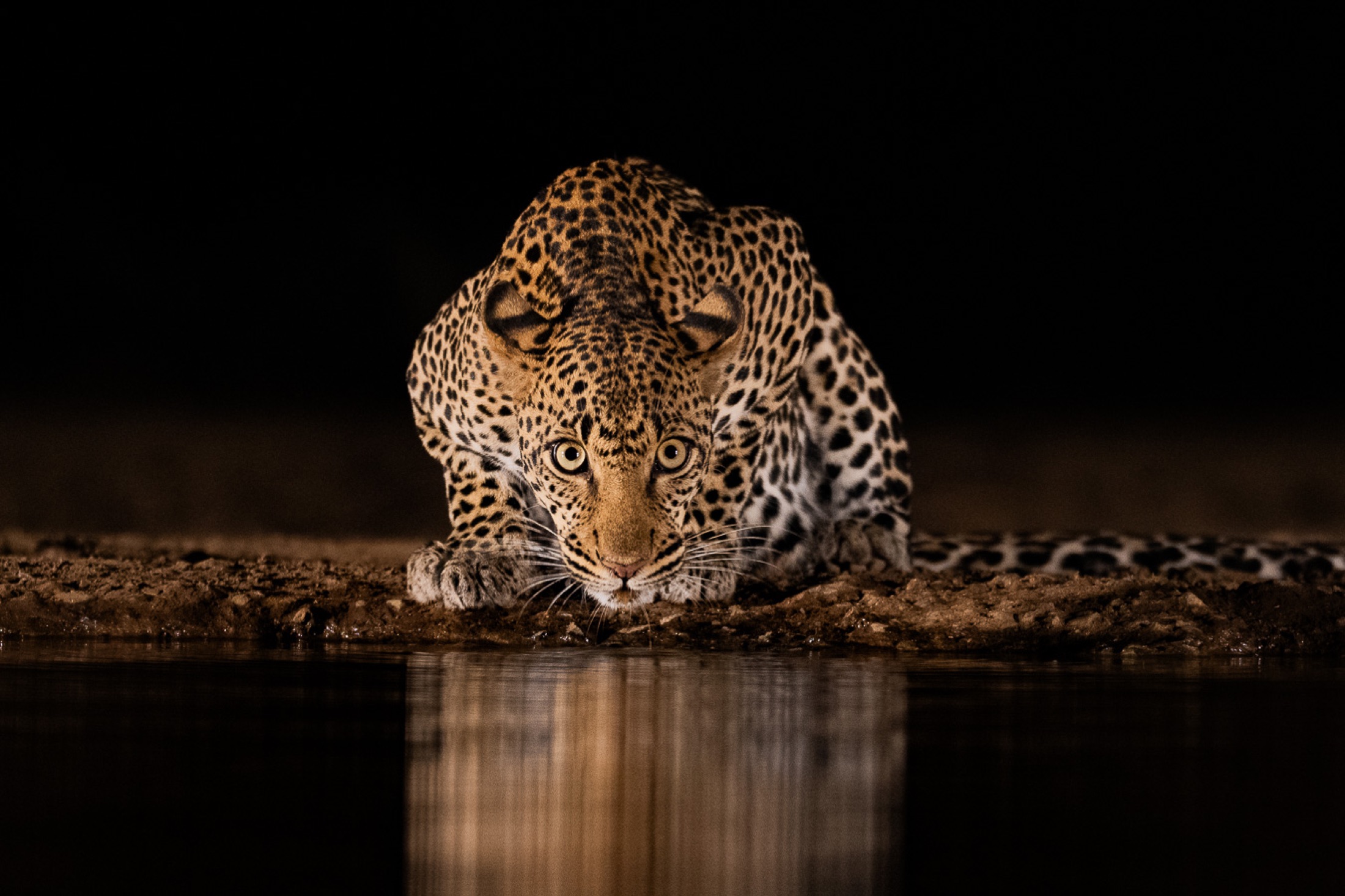
By night, we experience the thrill of night-hide photography, capturing elusive nocturnal predators like the caracal, striped hyena, serval, leopard, and lion. By day, we can elevate our journey with a helicopter safari soaring over Lake Magadi and Lake Natron, where vibrant pink flamingos gather in their thousands, and the lakes’ dramatic mineral patterns create a surreal canvas of colours from the air.
This tour focuses on night hide photography with the option of also including helicopter photography of flamingoes over Lakes Magadi and Natron.
We usually add this tour to the beginning or end of a Maasai Mara safari. Please contact us for more information and to talk through options.
Itinerary
Shompole Wilderness
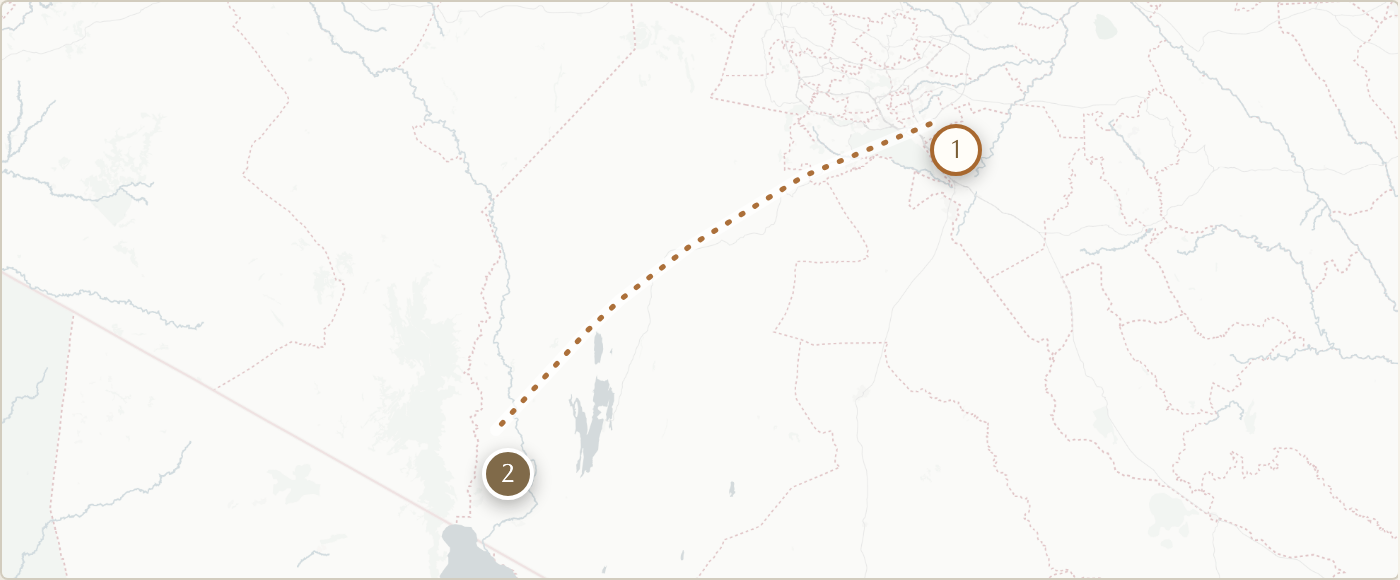
We drive south from Nairobi to Shompole in the morning. After an early lunch, we take a short helicopter flight over to Lake Magadi and Lake Shompole to photograph flamingoes as they fly over the surreal and dramatic mineral patterns created in the afternoon.
Following dinner at 6pm, we move to the night hide where we will stay for the night and wait for our nocturnal visitors. We expect to see caracal, striped hyena, leopard and lion among others. There are beds available in the hide so we can sleep in between sightings. A spotter will always be on duty and can wake us should anything arrive to the water hole.
Shompole Wilderness
At around 7 am, we take photos of animals with pre-dawn and early sunrise light, and then move back to the camp for breakfast and rest. A second helicopter flight is available in the afternoon to photograph the flamingoes. Every day creates different patterns and colours, providing a new and unique canvas for photography.
Following dinner at 6pm, we move again to the night hide for a second night.
After breakfast and a short rest, we drive back to Nairobi for our international departure.
Photography notes
This is a specialist night-hide shoot, and almost everything about it is unlike a daytime game drive. We photograph from a permanent sunken hide at eye level with a waterhole, working in low, controlled artificial light rather than sun, so the priority is fast glass and clean high-ISO performance. A 70-200mm f/2.8 is the workhorse here because our subjects come in genuinely close to the water and the wide-to-medium range lets us frame a full caracal or striped hyena as well as a leopard reflected at the water's edge; a 300mm or a 100-400mm earns its place for the shyer, more distant arrivals like serval and the animals that hang back in the shadows. Bring a fast prime if you have one. Because we are shooting at night with the hide's lighting, plan on high ISO (typically ISO 3200-12800 depending on your body), shutter speeds around 1/160-1/250s to hold a still or slowly-moving animal, and wide apertures; a beanbag or the hide's fixed rests steady long lenses far better than a tripod in the cramped space. Predators are unpredictable in their timing, so we shoot in patient bursts when an animal commits to the water and use the beds between sightings while the spotter watches. Silence and stillness are everything: no chatter, no phone screens, and think before you move, because caracal and serval in particular will melt away at the smallest disturbance.
By day the character changes completely. The pre-dawn and early-sunrise session on the second morning gives us soft, warm, directional light on whatever is still at the water, and that first hour is when the hide's images look most natural. The optional helicopter flights over Lake Magadi and Lake Natron are pure aerial photography of the flamingo flocks and the extraordinary mineral patterns in the soda lakes; from a moving aircraft you want a fast shutter (1/1000s or quicker) to kill vibration, a mid-range zoom in the 24-105mm or 24-70mm class for the abstract shapes and colour of the lakebed, and a slightly longer lens for the flamingoes themselves. The afternoon flight tends to give the strongest colour on the mineral flats, and every day paints a different canvas, so the two flights rarely repeat. Shompole sits low and hot on the floor of the Great Rift Valley, and our October-to-February window runs through the short rains into the dry season, which means warm nights, the chance of a heavy shower building over Natron, and dust once things dry out; protect your gear against both.
What to bring
Camera equipment
- 70-200mm f/2.8 - the workhorse for animals coming in close to the hide waterhole
- A longer lens (300mm prime or 100-400mm zoom) for shyer, more distant arrivals like serval
- A fast prime if you own one - the extra stop matters under the hide's low night lighting
- 24-105mm or 24-70mm for the helicopter aerials of the soda lakes and mineral patterns
- A body with strong high-ISO performance - expect to work at ISO 3200-12800 in the hide
- Beanbag for steadying long lenses on the hide's rests (a tripod is awkward in the cramped space)
- Plenty of memory cards, spare batteries and a backup drive - we shoot long night sessions and back up between them
- Lens cloths and a blower - condensation on warm humid nights and fine dust once the ground dries
Clothing
- Lightweight, breathable layers in muted, neutral colours for hot Rift Valley days
- A warm fleece or light jacket for the pre-dawn hide session - it cools off before sunrise
- A light waterproof or packable shell for the short-rains window (Nov-Dec can bring heavy showers)
- A wide-brimmed hat, sunglasses and high-factor sunscreen for the exposed lakes and helicopter flights
- Comfortable closed shoes for camp and the hide; nothing that rustles or reflects at night
- A buff or light scarf for dust once the season dries out
Documents, health & practical
- Valid passport and Kenya electronic travel authorisation arranged before travel
- Check current yellow-fever entry requirements for Kenya and carry your certificate if you hold one
- Antimalarial prophylaxis and a good insect repellent - the Rift Valley floor is a malaria area; speak to your travel clinic
- A small personal first-aid kit, any regular medication, and rehydration salts for the heat
- A headtorch with a red-light mode for moving around the hide and camp without spooking the animals
- Travel insurance covering the optional helicopter flight over Lakes Magadi and Natron
Inclusions / Exclusions
Inclusions
What is included in the tour cost:
- call prior to our departure, with John Haskew, to run through preparations, kit and ensure we are ready to start photographing before arriving
- Meeting on arrival at Nairobi and transfer to hotel on the first night
- Bed and breakfast at the hotel on the first night
- All road transfers and internal flights in Kenya
- Full board accommodation for the duration of the stay in Kenya
- House wines, beers, local spirits and soft drinks
- Park fees
- Community fees
- Experienced, qualified local guide
Exclusions
Not included in the tour cost:
- International flights to Nairobi (BA flights recommended if flying from the UK)
- eTA (electronic travel authorisation) – cost US$ 34 / GBP£ 27)
- Personal travel and health insurance