Summary
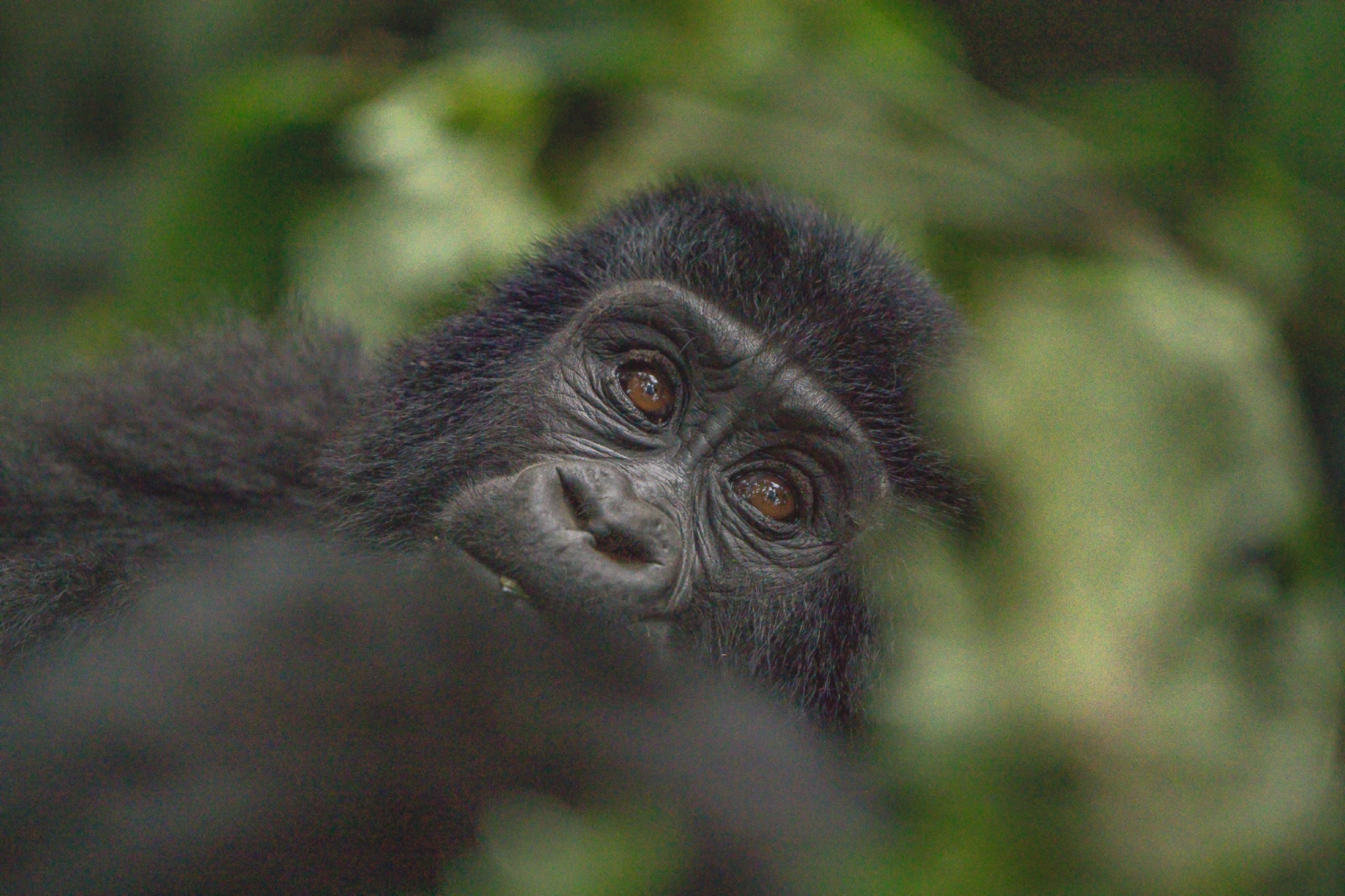
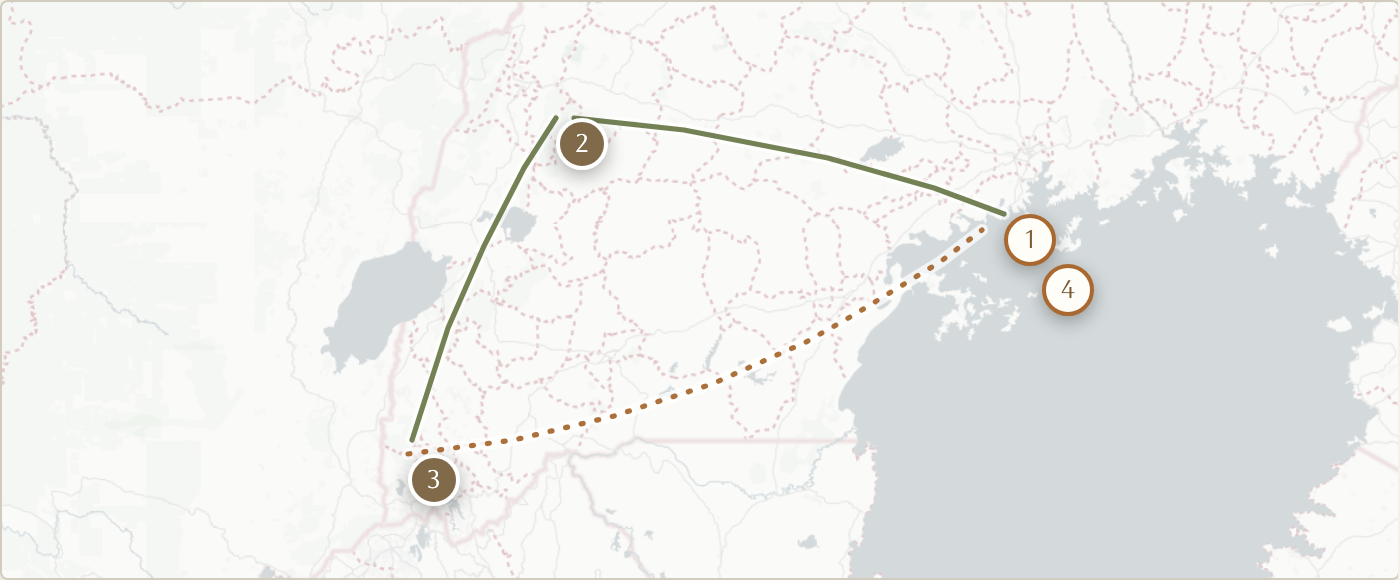
This is Uganda in a single journey — the two great primate encounters of East Africa, back to back. We track wild chimpanzees in the rainforest of Kibale, then travel south to the misty mountains of Bwindi to spend a morning with a habituated family of mountain gorillas. It is a small, privately-guided trip built for photographers, with time and patience at its heart.
Kibale holds one of the highest densities of primates anywhere on earth and its chimpanzee community is long habituated, so the tracking is a matter of walking in to a group that is genuinely relaxed rather than hunting for one. Alongside the chimps the forest carries red colobus, grey-cheeked mangabey and L'Hoest's monkey, and the neighbouring Bigodi wetland is worth a morning on its own.
Bwindi Impenetrable Forest is the harder and the more extraordinary of the two. The trek to a gorilla family can be an hour or the better part of a day on steep, wet, root-tangled ground, and the permitted hour with them is worked in deep forest shade that demands high ISO and a fast lens. Five nights in total, running June to September in the drier window when the trails are at their most workable.
Itinerary
Hotel Horizon Entebbe
We arrive to Entebbe, and will be met at the airport on arrival. We overnight ready for our journey to start the next day.
Guereza Canopy Lodge
We travel west to Kibale Forest — one of Africa's most enchanting rainforests and home to the highest density of primates on the continent. We spend a full day in the forest with the Kanyantale chimpanzee community, the most habituated group in Kibale, following them as they move, feed, groom, vocalise and sometimes display. It is intimate, immersive and quite unlike anywhere else.
Gorilla Mist Lodge
We continue south to the montane forests of Bwindi for the journey's crescendo. We set out before sunrise with our trackers and local guide to spend the day walking with the Mukiza gorilla family in the quiet Ruhija sector. Coming face to face with a wild mountain gorilla is one of the most profound wildlife experiences on Earth — and Ruhija's quieter trails make for less crowded, more personal encounters.
After a final morning in the forest we make our way back towards Entebbe, in good time to connect with onward international flights home.
Photography notes
This is forest photography, not the open savanna, and it rewards a completely different kit and mindset. In both Kibale and Bwindi you are on foot, following the primates through dense, dark, wet forest, so a mid-range zoom is the workhorse rather than a long lens: something in the 24-70mm and 70-200mm bracket covers almost everything, and a fast prime around 35mm or 50mm earns its place when a chimp or gorilla is only a few metres away, which happens more often than people expect. A big 500mm or 600mm is largely dead weight here; you rarely have the distance or the clean sightline to use it, and it is exhausting to carry up Bwindi's slopes. The great challenge is light. Under a closed rainforest canopy you are often shooting at ISO 3200-6400 and beyond, wide open, fighting for a shutter speed that will freeze a moving, grooming, restless animal in deep shade. A body with genuinely good high-ISO performance is the single most valuable thing you can bring. Expect dappled, contrasty light where a shaft of sun and deep shadow sit in the same frame, and be ready to work with it rather than against it — a black gorilla against dark foliage is a metering test every time, so I shoot manual, watch the histogram, and hold detail in the fur. Flash is not used with the gorillas and I would keep it off the chimps too; it is intrusive and the results look it.
The behaviour shapes the day. In Kibale the Kanyantale chimps are habituated and busy — they feed, groom, vocalise, and the males will sometimes charge and display, all of it fast and at eye level or high in the fig trees, so you need to be quick with focus and comfortable working handheld at awkward upward angles. With the Mukiza gorillas in Bwindi's quieter Ruhija sector you get the opposite: your permitted time with the family passes calmly and intimately, and the pictures come from patience — a silverback's hands, an infant clinging to its mother, an eye meeting the lens through the leaves. You will typically have a limited window once the family is found, so I have my exposure sorted before we arrive and spend the time reading the group rather than fiddling with settings. Underfoot it is steep, muddy and slippery in both forests; the June-to-September months are the drier season and the better time to be here, but this is equatorial rainforest and it can rain hard on any day, so everything you shoot with has to cope with damp and humidity. A trek can be short or can run for several hours before the group is located, and the light is always flat and low under the canopy, so plan to earn every frame.
What to bring
Camera equipment
- A body with strong high-ISO performance — you will routinely be at ISO 3200-6400 or higher under the canopy, and this matters more than anything else
- A 70-200mm zoom as the main lens, plus a 24-70mm (or similar) for the close, wide encounters that happen constantly on foot
- A fast prime around 35mm or 50mm (f/1.8 or faster) for very close, low-light gorilla and chimp portraits — leave the 500mm/600mm at home, there is rarely the distance or sightline to use it
- Two bodies if you have them, to avoid changing lenses in the wet, dusty, humid forest
- Plenty of spare batteries (cold is not the issue, but long trek days and continuous shooting are) and ample memory cards
- A lightweight, comfortable camera harness or sling — you carry everything yourself up steep, muddy slopes, so weight discipline is everything
- Rain covers for cameras and lenses, plus a genuinely waterproof daypack or a strong dry-bag liner; silica gel and a means of drying gear overnight against the humidity
- A lens cloth and blower for the constant battle with mist, drizzle and condensation
- No flash for the gorillas or chimps — it is intrusive and prohibited-feeling in practice; work with the available light
Clothing
- Lightweight, quick-drying long-sleeved shirts and long trousers in muted greens and browns — full cover protects against stinging nettles, thorns, ants and insects in the undergrowth
- A good waterproof jacket and, ideally, waterproof over-trousers — it can rain hard on any day even in the drier season
- Sturdy, broken-in, ankle-supporting waterproof hiking boots — the terrain in both Kibale and Bwindi is steep, muddy and slippery
- Gaiters to keep mud, water and ants out of your boots, and thick socks tucked into your trousers
- Gardening-style or thin grippy gloves for grabbing wet vegetation and steadying yourself on the trek
- A warm layer — early starts in the montane forest of Bwindi (Ruhija sits at altitude) can be genuinely cool and misty before the day warms
- A wide-brimmed hat and sunglasses for the open sections, and insect repellent
Documents, health & practical
- A valid passport, Uganda entry visa (arrange in advance), and a Yellow Fever vaccination certificate — it is required for entry
- Gorilla and chimpanzee tracking permits — these are arranged as part of the trip; bring the passport that matches your permit booking
- Antimalarial prophylaxis and a discussion with your travel clinic well before departure; routine vaccinations up to date
- A face mask for the gorilla and chimp encounters — masks are the norm to protect the primates from human respiratory illness, and you should not track if you are unwell with a cold or flu
- A reasonable level of fitness — the Bwindi trek in particular can be steep and long, and hiring a porter to carry your daypack is well worth it and supports the local community
- A comfortable daypack with at least 1.5-2 litres of water, a packed lunch, and high-energy snacks for the longer trek days
- A walking pole or two for the muddy descents, gloves, and blister plasters
- Cash in small denominations for porter tips and gratuities for trackers and guides
Inclusions / Exclusions
Inclusions
What is included in the tour cost:
- A call before departure, with John Haskew, to run through preparations, kit and settings so we are ready to start shooting from day one
- Meeting on arrival at Entebbe airport and transfer to the lodge on the first night
- Bed and breakfast at the lodge on the first night
- All road transfers and internal flights within Uganda
- Full-board accommodation for the duration of the stay in Uganda
- House wines, beers, local spirits and soft drinks
- Chimpanzee and gorilla tracking permits
- Park fees
- Community fees
- An experienced, qualified local guide
Exclusions
Not included in the tour cost:
- International flights to Entebbe (BA flights recommended if flying from the UK)
- eTA (electronic travel authorisation) for Uganda
- Personal travel and health insurance