Summary
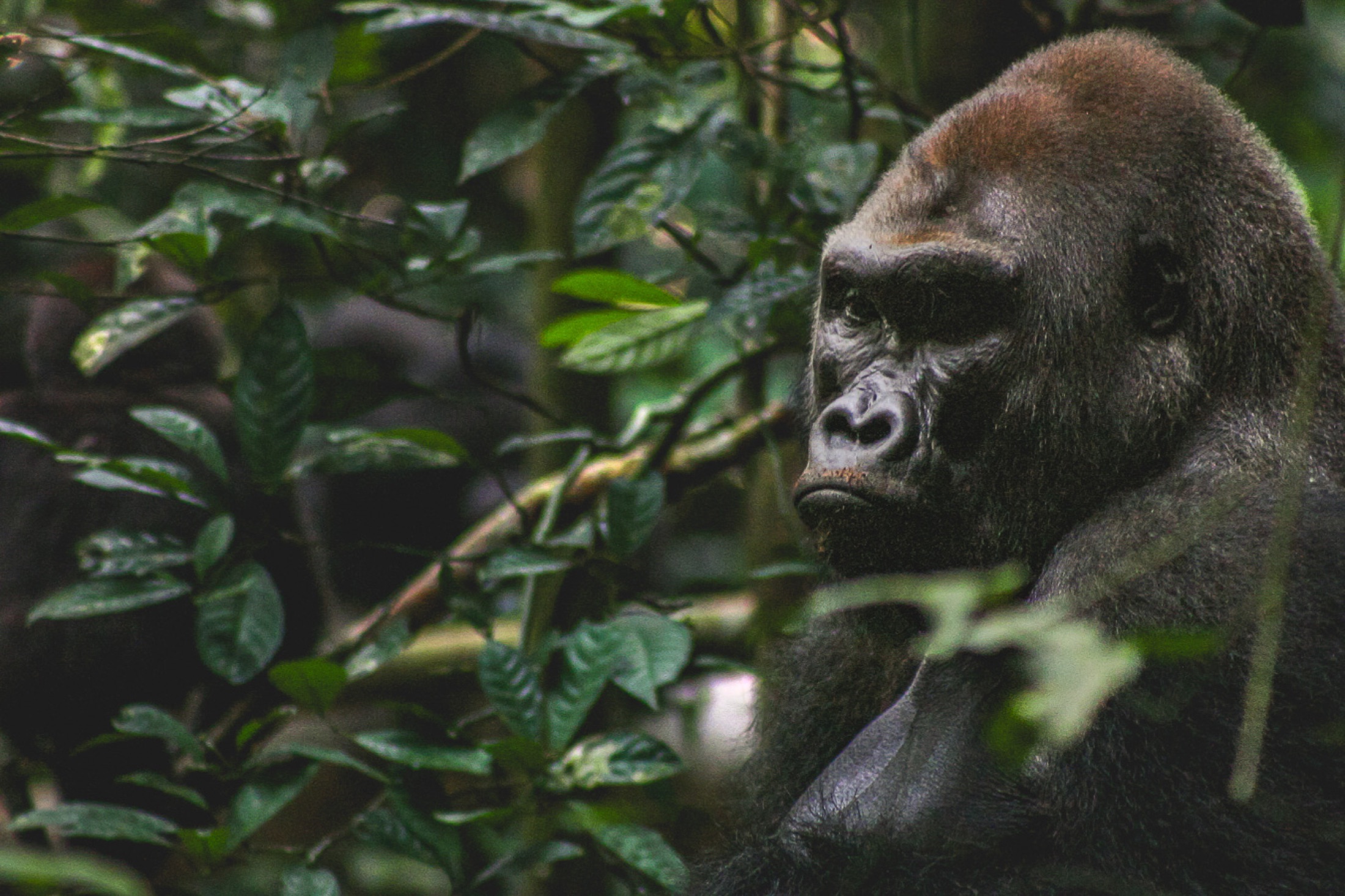
This extraordinary adventure offers the rare opportunity to track endangered Western Lowland Gorillas, spending intimate moments observing wild families deep in the untouched rainforests of Odzala-Kokoua National Park. We will explore Africa’s most pristine rainforests, immersing ourselves in the heart of the Congo Basin — a remote and biodiverse ecosystem teeming with unique wildlife and rich natural beauty.
We will also encounter forest elephants, buffalo, sitatungas, and other elusive animals that gather in forest clearings (bais) and waterways. We will enjoy guided walks and kayak journeys through open forest clearings, where secret wildlife gatherings and hidden ecological wonders await discovery. This safari promises extraordinary opportunities to capture close-up images of gorillas and rare rainforest species, making it a once-in-a-lifetime adventure in one of Africa’s last truly wild frontiers.
Itinerary
Radisson Blu Brazzaville
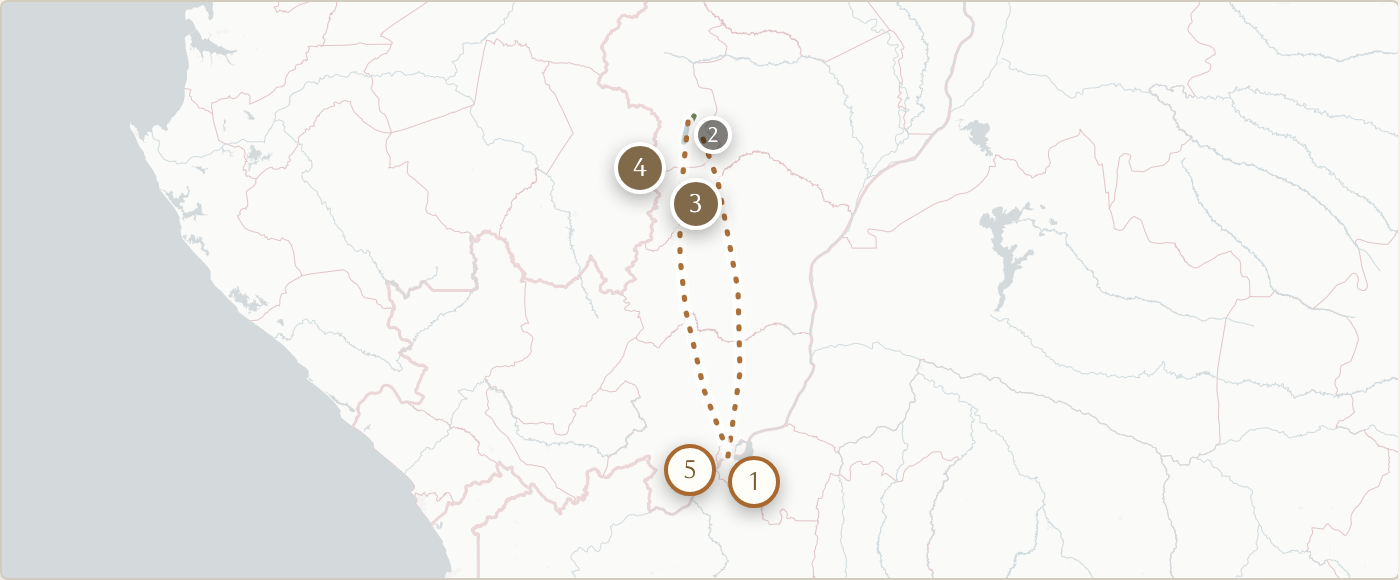
Arrive into Brazzaville and transfer to the Radisson Blu for an overnight stay, ready for the onward charter flight to Odzala the following morning.
Fly from Brazzaville to Odzala-Kokoua National Park on Kamba's scheduled aircraft, then transfer by road to Ngaga Lodge in the Ndzehi forest concession. Kamba's flights operate on Mondays and Thursdays, so the journey runs Monday to Monday or Thursday to Thursday.
Ngaga is the gorilla base, set beside a research station where a team has been studying these Western Lowland Gorillas for decades. Tracking is on foot through closed-canopy Marantaceae forest with a guide and a tracker. Two gorilla tracking permits are included on this journey. Alongside the tracking there are guided forest walks, night walks, a village visit and nocturnal drives.
Transfer to Lango Lodge on the edge of Lango Bai, kayaking down the Lekoli River and finishing the last stretch on foot. Two nights here for bai walks, birding, and night-vision watching over the clearing, where forest elephant, forest buffalo and sitatunga come out to feed.
Two nights at Mboko Lodge on the Lekoli River — river cruises, kayaking, and walking through both forest and savanna. This is the open half of the trip, and the half that rewards a long lens.
Fly back to Brazzaville, with a half-day tour of the city and lunch included. The arrival night in Brazzaville is included in this journey; onward international flights, and any further Brazzaville hotel nights on departure, are arranged separately.
Photography notes
This is low-light forest photography before it is anything else, and it shapes every choice you make. The closed-canopy Marantaceae forest around Ngaga swallows light, so plan to work at high ISO — a modern full-frame or mirrorless body that stays clean at 3200-6400 and pushes higher is worth more here than any lens you own. A fast standard zoom in the 24-70mm range is the workhorse: gorilla trackings are done on foot and the group is habituated, so encounters are genuinely close and often too close for a long telephoto — you'll frequently find a silverback or a mother and infant filling a 50mm frame, and you'll want the wide end to place them in the green wall of forest. Bring a fast telephoto (70-200mm f/2.8, or a 100-400 accepting you'll be near wide-open) for the moments when an animal holds back in the undergrowth or moves up into the canopy. Autofocus struggles in the gloom and against a busy leafy background, so shoot single-point where you can, expect to hand-hold at shutter speeds that feel uncomfortable, and lean on image stabilisation. There is no flash — it is not permitted around the gorillas and would be pointless besides. Anticipate the behaviour: feeding, an infant clambering, a silverback's slow gaze, brief chest-beats — the intimacy is the picture, not reach. Trackings run to a fixed contact window once the group is found, so you are working quickly in difficult light against a moving subject, and a body with a deep buffer and reliable eye/animal detection earns its place.
The second half of the trip, on the bais and the Lekoli River around Lango and Mboko, is an entirely different discipline and rebalances your kit toward the long end. Here the forest opens into clearings where forest elephants, forest buffalo and sitatunga come out to feed, and you are shooting across distance in far better light — this is where a 100-400 or a 500/600mm earns its weight, often from the edge of the bai on foot or from a kayak on the water. August and September are the drier months in this part of the Congo Basin, which is why the season is timed here: firmer trails, fewer of the heaviest downpours and clearer clearings, though this is equatorial rainforest and you should still expect humidity, mud underfoot and rain at any time — waterproof your bag, not just your body. Light is flat and even under overcast, which is kind to gorilla fur and forest greens; the low, warm windows come early and late, so the sundowners and river transfers are worth having a camera ready for. Humidity is the quiet enemy of gear out here — lenses fog when you move between air-conditioned rooms and the forest, condensation forms on cold glass, and everything stays damp — so silica gel, sealed bags and a disciplined drying routine each night matter as much as any lens.
What to bring
Camera equipment
- A body that stays clean at high ISO (3200-6400 and beyond) - the closed-canopy forest is dark and this matters more than anything else
- Fast standard zoom (24-70mm f/2.8 or similar) - the workhorse for close, habituated gorilla encounters where a long lens is too much
- Fast telephoto (70-200mm f/2.8) for gorillas that hold back in the undergrowth or move into the canopy
- Longer telephoto (100-400mm, or a 500/600mm) for forest elephants, buffalo and sitatunga across the open bais and from the kayaks
- A second body if you have one, so you can carry a wide and a long lens without changing glass in the humidity and dust
- No flash - it is not permitted around the gorillas and is pointless in any case
- Plenty of memory cards, spare batteries and a means of backing up nightly - power at the lodges is generator/solar and not guaranteed continuous
- Waterproof camera bag or dry bag, plus rain covers - essential on the river and in equatorial rain
- Silica gel packs and sealed bags to fight condensation and fungus; a microfibre cloth for constant lens fogging
- Monopod rather than a tripod - useful in low forest light but you carry everything on foot; a beanbag helps from the kayak
Clothing
- Lightweight, quick-drying long-sleeved shirts and trousers in neutral/muted greens and browns - cover skin against insects and undergrowth
- A good waterproof jacket and a packable rain layer - this is rainforest even in the drier season
- Sturdy, broken-in waterproof walking boots with ankle support for muddy, root-tangled forest trails; a spare pair of shoes to dry out
- Gaiters and thick socks - trails are wet and muddy, and gaiters help against mud, mud water and biting insects
- A lightweight fleece or warm layer for cool, damp early mornings and evenings
- A wide-brimmed hat, plus a buff or light gloves for the trackings; sunglasses for the open bais and river
- Sandals or quick-dry footwear for the kayak legs and around the lodge
- Insect repellent (high-DEET) and long clothing - the forest has biting flies, mosquitoes and sweat bees
Documents, health & practical
- Valid passport with ample validity and blank pages, plus a Republic of Congo visa arranged in advance - check current requirements well before travel
- Yellow fever vaccination certificate - it is required for entry and you will be asked for it
- Antimalarial prophylaxis - this is a high-risk malaria zone; discuss the right course with a travel clinic in good time
- Routine and travel vaccinations up to date (e.g. tetanus, hepatitis, typhoid) - take specialist travel-health advice for Central Africa
- Gorilla tracking is close-contact with a great ape: bring FFP2-grade face masks (worn near the gorillas to protect them from human disease) and do not track if you are unwell - respiratory illness can be passed to the group
- Comprehensive travel and medical insurance including emergency evacuation - this is a very remote region reached by charter flight
- Strict luggage weight limits apply on the light charter to Mboko - pack soft bags and travel light; confirm the allowance before you fly
- A head torch for early starts, night walks and unreliable power; a power bank and appropriate plug adapters
- A personal first-aid kit with rehydration salts, blister care and any personal medication in its original packaging
- Cash in the appropriate currency for tips and incidentals - do not rely on cards or ATMs in Odzala
Inclusions / Exclusions
Inclusions
What is included in the tour cost:
- A call prior to our departure, with John Haskew, to run through preparations and kit and make sure we are ready to start photographing before we arrive
- One night’s accommodation at the Radisson Blu Brazzaville on arrival, including the airport transfer
- Return scheduled Kamba charter flights, Brazzaville to Odzala and back
- Two gorilla tracking permits
- All road transfers within Odzala
- Full board accommodation at Ngaga, Lango and Mboko lodges
- House wines, beers, local spirits and soft drinks
- Odzala-Kokoua National Park fees
- Community and conservation levy
- All guided activities with an experienced, qualified local guide
- A half-day tour of Brazzaville, including lunch
- Medical evacuation cover, airport assistance, and our letter of invitation for the visa
Exclusions
Not included in the tour cost:
- International flights to Brazzaville
- Republic of Congo visa
- Additional hotel nights in Brazzaville beyond the included arrival night — including any departure-night stay — which we book and quote separately
- Personal travel and health insurance, which is mandatory and must cover emergency medical evacuation