Summary
We experience the otherworldly beauty of Sossusvlei, where towering burnt-orange dunes contrast against bleached white pans and ancient camelthorn trees, creating an iconic landscape. We explore the haunting Skeleton Coast, where windswept shores, and vast Cape fur seal colonies paint a scene of raw, untamed wilderness.
We track desert-adapted wildlife in Damaraland and Hoanib, following elephants, rhinos, giraffes, and lions as they roam vast ochre plains and dry riverbeds beneath endless skies. We immerse ourselves in the rich culture of Namibia’s Himba people, capturing moments that reflect the spirit of one of Africa’s last semi-nomadic tribes.
We experience the thrill of Etosha’s legendary waterholes, where close encounters with rhinos, lions, elephants, and giraffes unfold against stark salt pans and shimmering mirages.
Itinerary
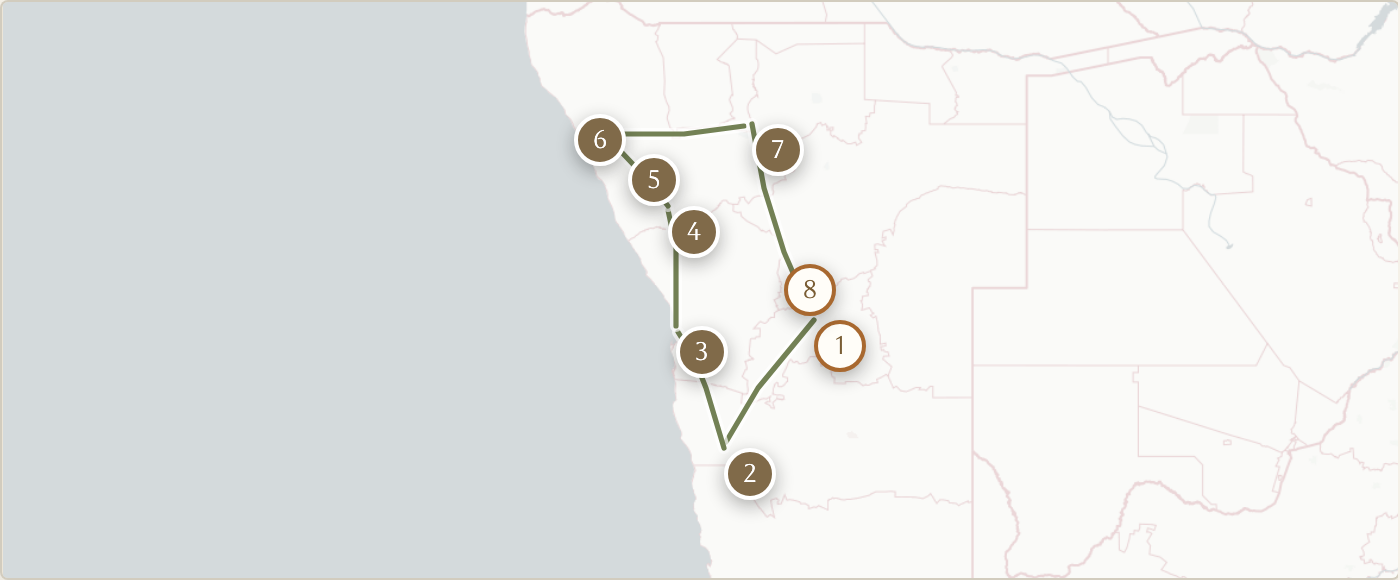
Elegant Guesthouse
Airport pick-up and transfer to lodge. Safari briefing and photography preparation.
Dead Valley Lodge
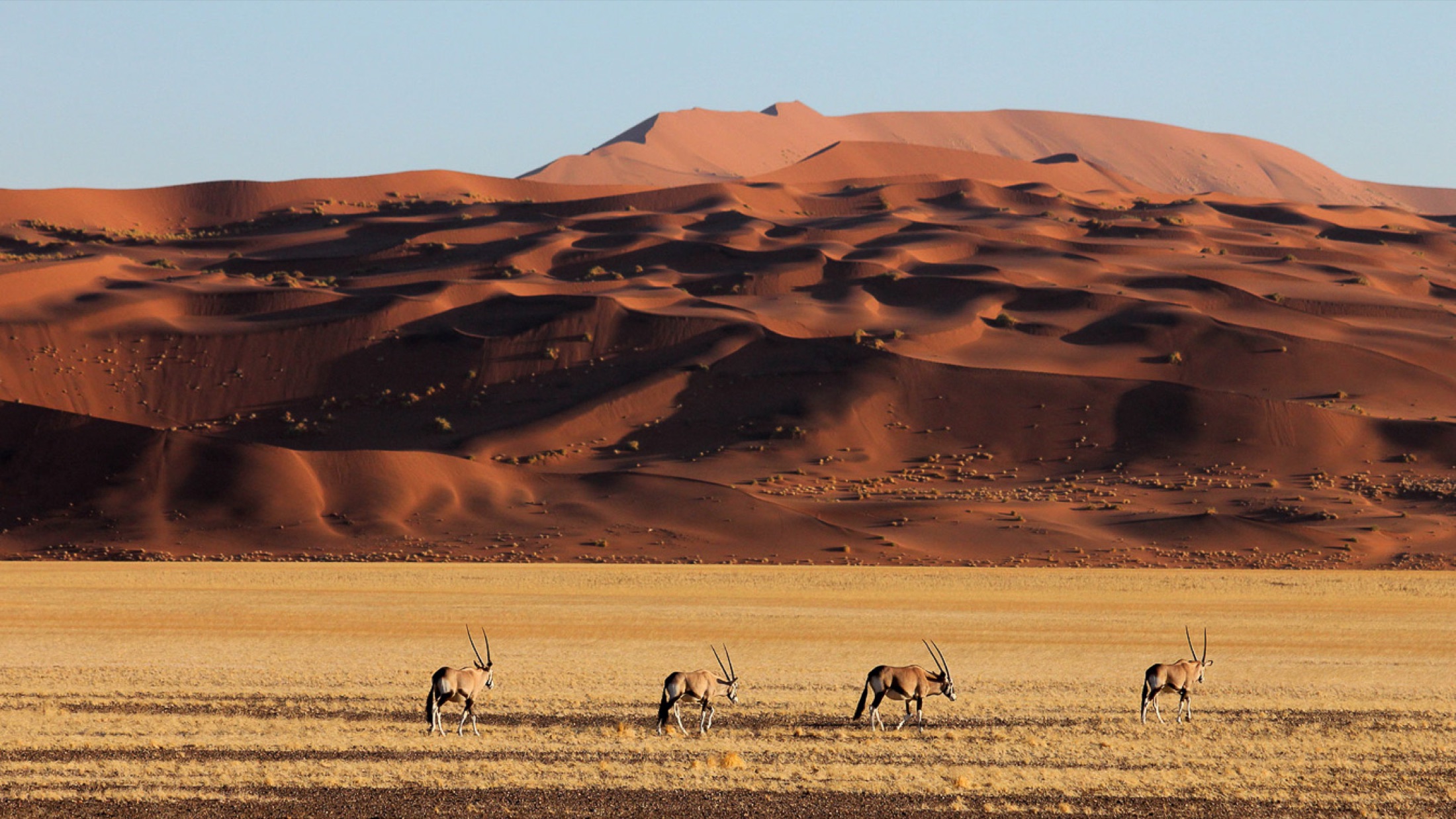
We continue our journey south towards the towering dunes of Sossusvlei, a surreal desert landscape that shifts with the light. Early mornings bring us to Dune 45 and Deadvlei, where skeletal trees stand stark against the white clay pan and fiery-red dunes. We capture the silhouettes of oryx moving gracefully across the sand, chasing the golden light that defines this otherworldly terrain.
Swakopmund Guesthouse
We journey west towards Swakopmund, where the shifting dunes meet the wild Atlantic coastline. En route, we stop at the breathtaking Sandwich Harbour, where towering dunes cascade into the ocean. We also visit the bustling Cape Fur seal colony, photographing thousands of seals against the backdrop of crashing waves and dramatic landscapes.
Camp Kipwe · Twyfelfontein
We explore the rugged beauty of Damaraland, a striking region of red rock formations and ancient riverbeds. Here, we track desert-adapted elephants and rhinos that roam across ochre-colored plains. We also have the unique opportunity to visit an authentic Himba village in Kaokoland, capturing intimate moments that showcase their rich cultural heritage and daily life.
Hoanib Valley Lodge · Hoanib River
We venture deeper into the wild as we arrive at the Hoanib River Valley, home to some of Africa’s most elusive wildlife. This is prime territory for photographing desert-adapted lions, giraffes, and elephants as they navigate the arid landscapes. We stake out waterholes and traverse dry riverbeds, capturing rare and intimate wildlife moments against vast, untouched horizons.
Grootberg Lodge
We climb via the dramatic Grootberg Pass, one of Namibia’s most scenic drives, onto the Grootberg plateau. From the escarpment edge we look out over the Klip River valley below, with time for a scenic drive along the plateau before continuing on towards Etosha.
Etosha Taleni Village · Etosha South
We continue our expedition into the iconic Etosha National Park, where expansive salt pans create an ethereal backdrop for wildlife photography. We spend time at legendary waterholes, waiting for rhinos, lions, and elephants to emerge in the golden light. Sunset silhouettes and dust-kicked scenes make for powerful compositions as we immerse ourselves in Etosha’s raw beauty.
Okapuka Safari Lodge · Greater Windhoek
After capturing final moments in Namibia’s wild heart, we fly to Windhoek to connect to our outbound flight, carrying with us a collection of unforgettable images and memories of an extraordinary safari.
Photography notes
Namibia is a two-lens trip and you'll switch constantly. A 100–400mm (or a 500/600mm prime if you have it) is the workhorse for the desert-adapted wildlife of Damaraland, the Hoanib and Etosha's waterholes, where oryx, gemsbok, giraffe, elephant and rhino often sit at genuine distance across open plains and dry riverbeds. But this is as much a landscape safari as a wildlife one, so carry a 16–35mm and a 24–70mm too: the signature Namibia frames are small animals against enormous space — a lone oryx cresting a dune at Sossusvlei, elephant strung out along an ochre riverbed — not frame-filling portraits. We shoot almost entirely from open or pop-top vehicles, so a beanbag over the door or sill is your main support; a monopod helps on the walks around Deadvlei and Sandwich Harbour. Bring a solid tripod as well, because Deadvlei's skeletal camelthorn trees at first light, and the night skies over some of the darkest terrain on Earth, both reward long exposures.
Light dictates the whole rhythm of the days. In the August–September dry season the middle of the day is harsh, high-contrast and hazy, so we work hard at the edges — pre-dawn starts to be on Dune 45 or in Deadvlei as the first sun rakes the pans, and long golden late afternoons at the waterholes. This is the best time of year for wildlife: it's Namibia's dry winter, animals concentrate at shrinking water, vegetation is thin and sightlines are open, and the desert-adapted lions of the Hoanib move on the riverbeds. Expect cold, still dawns and warm afternoons with a big diurnal swing, near-constant dust, and coastal fog and a stiff onshore wind around Swakopmund, Sandwich Harbour and the Cape fur seal colony — protect your gear and expect flat, soft light on the coast that suits the seals and the Skeleton Coast mood. Etosha's waterholes are where the close encounters happen: pick your side for the light, be set up before the animals arrive, and wait — the pale pan and shimmering heat haze are part of the picture, not a problem to fix. When we spend time with a Himba community, photography is only ever with genuine, unhurried consent; work slowly, shoot at eye level, and favour natural side-light over anything intrusive.
What to bring
Camera equipment
- 100–400mm zoom (or a 500/600mm prime) — the workhorse for desert-adapted wildlife and Etosha waterholes, where animals often sit at distance
- 16–35mm and 24–70mm — Namibia is as much a landscape as a wildlife safari; the signature frames are small animals in vast space (Sossusvlei, Deadvlei, ochre riverbeds)
- Two bodies if you can, to avoid lens changes in relentless dust; a full-frame or high-quality mirrorless body suits the wide dynamic range of dune-and-pan scenes
- Beanbag for shooting over the vehicle door or sill — your primary support on game drives
- Sturdy tripod for Deadvlei at first light and for astrophotography under some of the darkest skies on Earth; a monopod for walks at Deadvlei and Sandwich Harbour
- Polariser and graduated ND filters for the high-contrast desert light and bright pans
- Plenty of memory cards, a nightly backup drive, and spare batteries — big shot counts at the waterholes
- Thorough dust protection: sealed bags, a rocket blower, lens-cleaning cloths and wipes; sensor cleaning kit if you're comfortable using one
- Headtorch for pre-dawn starts and packing the vehicle before first light
Clothing
- Lightweight, breathable layers in neutral, muted colours — dust-toned browns, greens and khakis rather than bright white or black
- A warm fleece or insulated jacket and a hat for cold, still desert dawns; the diurnal swing is large this time of year
- A windproof/spray shell for the cold, foggy, windy Atlantic coast around Swakopmund, Sandwich Harbour and the seal colony
- Sun hat with a brim, high-SPF sunscreen and good sunglasses — the desert sun and reflective pans are intense by mid-morning
- A buff or scarf to keep dust off your face on drives and at the dunes
- Comfortable closed walking shoes or light boots for soft sand at Deadvlei and Sandwich Harbour, plus sandals for the vehicle
- Lightweight long sleeves and trousers for sun and dust protection through the day
Documents, health & practical
- Passport valid at least six months beyond travel with ample blank pages; check the current Namibian entry requirements for your nationality before you travel
- Travel insurance that covers remote-area evacuation — several camps are genuinely far from major towns
- Check malaria guidance with a travel clinic: the desert core is low-risk but the far north (Etosha and beyond) can carry seasonal risk, so seek current advice
- Routine vaccinations up to date; a yellow-fever certificate may be required only if you're arriving via an at-risk country — confirm for your routing
- A small personal medical kit: rehydration salts, lip balm and heavy-duty moisturiser (the air is extremely dry), and any personal medication in your carry-on
- Refillable water bottle and a habit of drinking more than you think you need — dehydration creeps up in the dry heat
- Cash in local currency (and small notes) for tips and community visits; card acceptance is patchy once you leave the towns
- Universal power adapter and a power bank for charging on the road; keep batteries topped up whenever the vehicle or camp allows
- For the Himba community visit, follow our guidance on respectful, consent-first photography — no images without genuine permission
Inclusions / Exclusions
Inclusions
What is included in the safari cost:
- call prior to our safari, with John Haskew, to run through preparations, kit and ensure we are ready to start photographing before arriving
- Meeting on arrival at Windhoek and transfer to hotel on the first night
- Bed and breakfast at the hotel on the first night
- All road transfers and internal flights in Namibia
- Full board accommodation for the duration of the stay in Namibia
- House wines, beers, local spirits and soft drinks
- Park fees
- Community fees
- Experienced, qualified local guide
Exclusions
Not included in the tour cost:
- International flights to Windhoek
- Namibia Visa
- Personal travel and health insurance