Summary
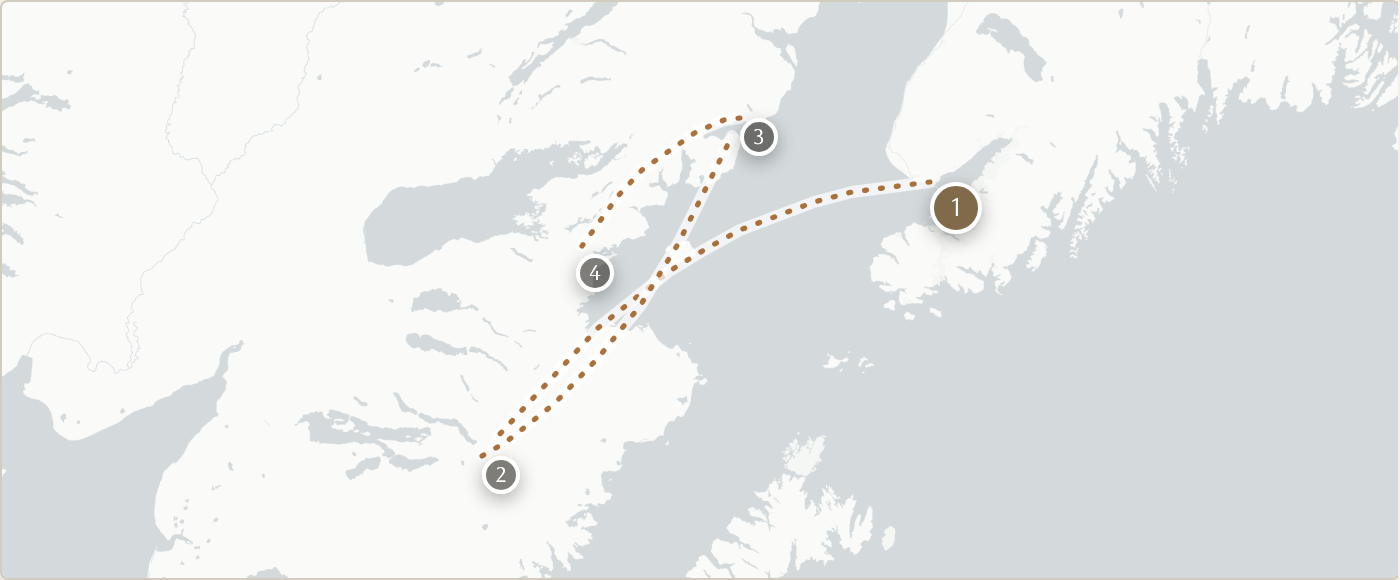
From June to September the coastal Brown Bears of southwest Alaska feed in the open — grazing the spring sedge meadows, digging clams on the tidal flats and, as the season turns, fishing the salmon runs. This safari is built around that season: seven days in total, opening with a night in Anchorage before flying on to the coast and closing with a same-day connection through Anchorage to your international departure flight, with five nights based in Homer on Kachemak Bay for the bear-viewing days themselves.
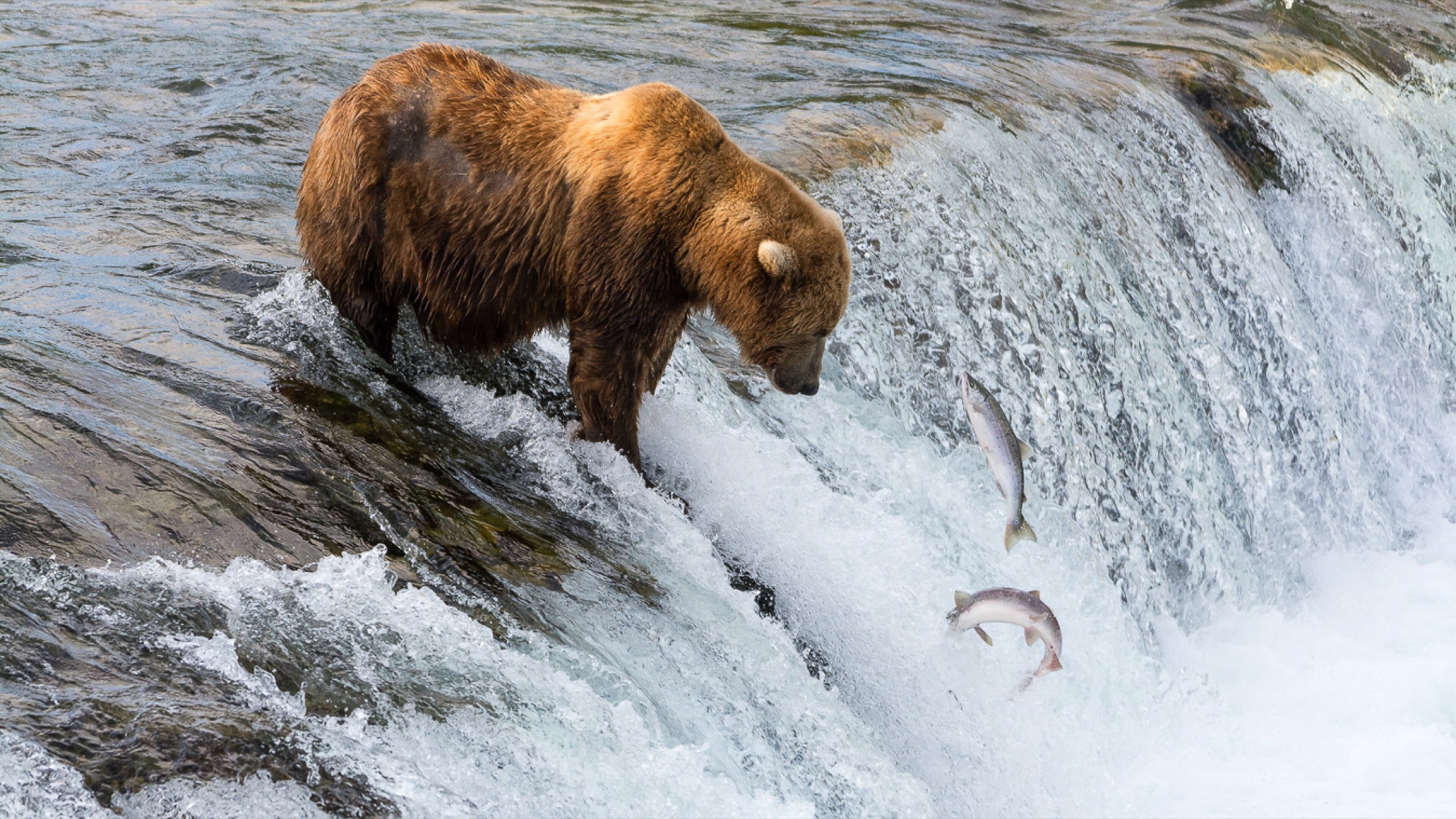
The bear-viewing days are two separate trip types, both flown out by our own charter plane from Homer. Two days are spent on the Katmai coast, where bears work the tidal flats and sedge meadows for six to eight hours on foot with professional photographic guidance. A further day flies out to Brooks Falls, in Katmai National Park, for the salmon-fishing action the falls are known for. A rest day in Homer sits alongside them as a weather buffer, since the flying is genuinely weather-dependent.
Evenings during the Homer days are spent back at the same hotel, with dinner followed by an image review and debrief of the day. The group is kept small, and chest waders and wading boots are provided.
Itinerary
Anchorage (Alaska)
Arrive in Anchorage and overnight there before heading on to the coast.
Homer (Alaska)
Fly from Anchorage to Homer and settle into the hotel that is home for the coming nights. At 5pm we meet for an orientation dinner covering the itinerary, the photographic approach, gear and the flight logistics for the days ahead.
Homer (Alaska)
Coastal bear-viewing, day one. A chartered floatplane carries us across Cook Inlet to the Katmai coast for six to eight hours on foot with the bears — sows with cubs, bears clamming on the flats, and salmon fishing later in the season — with field lunches taken by the planes. This is close, ground-level photography: working from a sitting or kneeling position low to the tidal flats and sedge meadows for eye-level bear portraits, alongside the wider bear-in-landscape frame — a bear small against flats, cloud and volcano. Flying is weather-dependent.
Homer (Alaska)
Coastal bear-viewing, day two — a second day working the tidal flats and sedge meadows on foot with the bears on the Katmai coast. Another six to eight hours on location, working the same low, ground-level angle as day one — sows shepherding cubs, bears digging clams and flipping rocks on the flats — with the best action read off the tide rather than the clock.
Homer (Alaska)
A float-plane day out to Brooks Falls in Katmai National Park, for the iconic salmon-fishing action the falls are known for. It is the same six to eight hours on location as the coastal days, but photographically different: mostly tripod-locked at the falls, holding a single frame and waiting for the fish, with fast continuous autofocus and a shutter speed around 1/2000s and up to freeze a salmon leaving the water — less on-foot mobility than the coastal days, more concentrated on the falls themselves.
Homer (Alaska)
A rest day in Homer, held as a buffer against weather — the fly-out days are genuinely weather-dependent, and this gives one spare day to recover a cancelled excursion. If the weather has cooperated and the day is free, it is also a good one for an optional boat trip out to Gull Island in Kachemak Bay, where kittiwakes, murres, cormorants and both tufted and horned puffins nest on the cliffs through the summer — otherwise, simply rest.
Fly from Homer back to Anchorage, connecting the same evening with your international departure flight.
Photography notes
This is close, ground-level, on-foot bear photography, so the working range is wider than most people expect: a 100-400mm or 200-600mm zoom is the single most useful lens, and on the flats and sedge meadows you'll often find yourself pulling back rather than reaching for more length. A second body on a 24-70mm or 16-35mm earns its place for the signature coastal frame — a bear small in a huge landscape of tidal flat, cloud and volcano. We photograph from a sitting or kneeling position on the ground, working off the low angle that makes these images: eye-level with the bear, the meadow or wet sand filling the foreground. A beanbag or a low ground-pod is more use than a full tripod for most of the day, though a tripod matters at the salmon streams where you hold one frame and wait. The bears do the work — sows shepherding cubs, animals digging clams and flipping rocks on the tidal flats, and later in the season the fishing itself, which is where you want fast continuous autofocus and a shutter around 1/2000s and up to freeze a salmon leaving the water. Learn to read the light and behaviour together: bears often work the flats hard on a falling tide, and the best action clusters around those windows rather than the clock.
The season shapes everything. Early summer is sedge-meadow and clam-digging work under long, soft sub-arctic light — at this latitude the days are enormously long, golden hours stretch out morning and evening, and overcast is your friend for even light on dark fur that otherwise blocks up in hard sun. From July into September the salmon runs bring the fishing behaviour and the frame-filling drama everyone comes for. It is coastal Alaska, so weather runs the trip: the fly-out days are genuinely weather-dependent, and each morning's destination — Katmai, Lake Clark, the McNeil River area or out toward the Bristol Bay watershed — is chosen on the day for light, tides and where the bears are. Expect low cloud, rain and wind as normal conditions, protect your gear accordingly, and treat a socked-in morning as part of how the coast works rather than a lost day. Everything is on foot in the company of professional guides who set the positions and the distances; your job is to stay quiet, stay low, and be ready when a sow brings her cubs across the flat in front of you.
What to bring
Camera equipment
- A telephoto zoom as your main lens — 100-400mm or 200-600mm covers portraits, behaviour and the fishing action; on the flats you'll frequently be at the shorter end
- A second body with a wide-to-standard zoom (16-35mm or 24-70mm) for the bear-in-landscape frames — tidal flats, cloud and the volcanoes behind
- A body with fast, reliable continuous autofocus and a deep buffer for burst shooting the salmon-fishing sequences
- Beanbag or a low ground-pod for shooting from a sitting or kneeling position — the low angle makes these images; a lightweight tripod is worth it at the salmon streams
- Plenty of memory cards and a laptop or backup drive for the nightly image review and debrief back in Homer
- Spare batteries — cold, damp days and long shooting hours drain them faster than you expect
- Serious rain protection for camera and lens (a proper rain cover, not just a bag) plus a good supply of microfibre cloths for the constant spray and drizzle
- A dry bag or waterproof pack liner — you are wading and working at the water's edge, and gear will get splashed
Clothing
- Full waterproofs — a genuine hardshell jacket and over-trousers; rain and wind are the normal coastal condition, not the exception
- Warm mid layers (fleece or light down) and a wool or synthetic base layer — sub-arctic mornings on the flats are cold even in summer
- Warm hat and gloves, and a spare set kept dry; a buff or neck gaiter for wind off the water
- Chest waders and wading boots are provided, but bring warm socks and a thin liner sock for long hours standing in cold water
- Comfortable, quick-drying trousers and layers you can add and shed through the day
- A brimmed or peaked hat and polarising sunglasses for the bright, reflective days between the weather
- Kneepads or a compact sit-mat — you spend hours low to wet ground and sand
Documents, health & practical
- A valid passport, and for most non-US visitors an ESTA authorisation or the appropriate US visa — check your own nationality's requirements well ahead of travel
- Travel insurance that covers light-aircraft/bush-plane travel and remote-area evacuation, given the daily fly-outs across Cook Inlet
- The fly-out days use small chartered aircraft with strict baggage weight limits — pack camera gear and clothing light and in soft bags, and confirm the allowance before you travel
- A dry-day pack for the plane — you carry your own gear for six to eight hours on foot with field lunches taken by the aircraft
- Any personal medication in your carry-on, plus basics for cold, wet, long days outdoors — blister care, lip balm and a personal first-aid kit
- Follow your guides' instructions on distance and positioning at all times; the whole approach depends on calm, predictable behaviour around the bears
Inclusions / Exclusions
This safari runs from June to September, in step with the coastal Brown Bear season. Please contact us for current pricing and dates.
Inclusions
- Hotel accommodation in Anchorage and Homer
- All meals and non-alcoholic drinks during the safari
- All chartered aircraft and local transport
- Professional photographic guidance
- Chest waders and wading boots
- Staff gratuities
Exclusions
- Flights to and from Anchorage
- Alcoholic drinks
- Trip and medical-evacuation insurance (required)