Summary
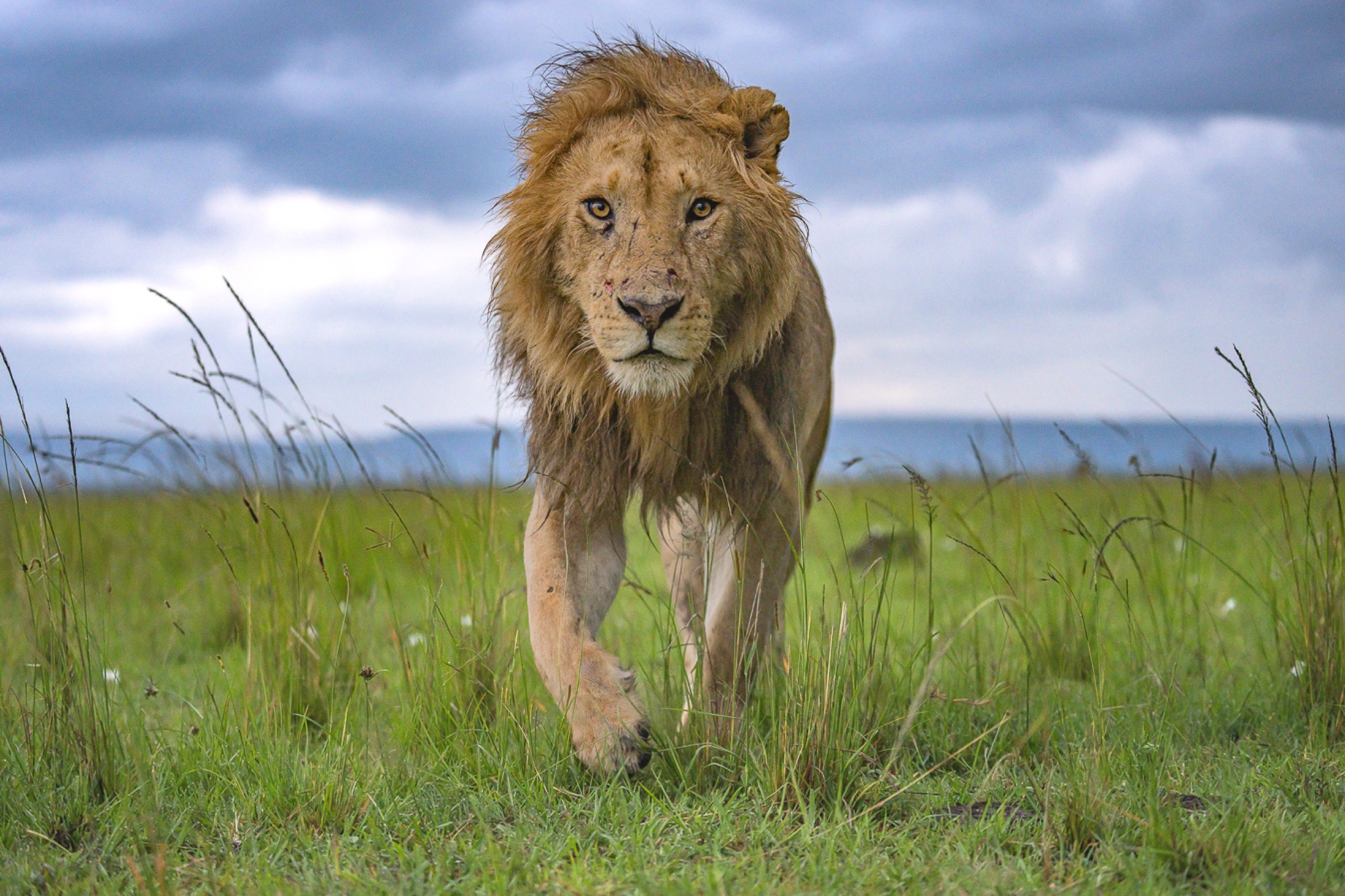
An expert-led photo safari in the Maasai Mara dedicated entirely to the cats — leopard, cheetah and lion — with time given to each rather than a race between them. We stay with individuals and family groups to work the whole range of behaviour: hunting, the stalk and the chase, cubs at play, grooming, the long patient wait beneath a leopard's tree.
The smaller cats matter here too. Serval and African wildcat are regular on the open grassland and along the drainage lines, and caracal is the one that turns a good week into a memorable one. They rarely let a vehicle close, so they are worked with long glass and patience rather than approach.
Seven nights in the Mara at MLIMA | Maasai Mara, in a small group with a maximum of three people to a vehicle, running October to February — the tail of the short rains into the drier turn of the year, when the grass is green, the cats are in good condition, there are cubs of the year, and the afternoon skies carry real weather behind a big cat.
Itinerary
Mlima Mara · Maasai Mara
Arrive in Nairobi and overnight near the airport. Everything from the moment we land to the moment we fly home is taken care of — the only things to arrange independently are the international flights into Nairobi and the Kenyan visa.
Mlima Mara
Seven nights at MLIMA | Maasai Mara with the days shaped entirely around the cats. We are out before sunrise, when lion and cheetah are still working and the light is low and warm, and we stay in the field as long as there is something to stay for — the middle hours are for cubs, grooming and the wait at a leopard's tree rather than for driving back to camp. We follow known individuals and prides across the days, which is what makes real behaviour possible: a cheetah lengthening its stride, a pride fanning wide on a target, a leopard reading a gully. Between the big cats we work the grassland and drainage lines for serval, wildcat and, with luck, caracal. Cards are backed up nightly and the next morning is planned around where the cats were last seen.
A last dawn drive if time allows, then a final breakfast in camp before the run out to the airstrip.
A last dawn drive if time allows, then the return flight to Nairobi for onward connections.
Photography notes
This is telephoto work off an open vehicle, and the cats set the range. A 100-400mm or a 200-600mm zoom is the workhorse for lion, leopard and cheetah portraits and behaviour; a fast 300mm, 400mm or 500mm prime earns its weight in the low light of first and last light, and a teleconverter helps you reach the smaller cats — serval, wildcat and, if we are lucky, caracal — which rarely let you close in. Keep a 70-200mm and even a 24-70mm on a second body, because the Mara's real gift is the cat small in a vast grassland-and-sky landscape, not just the frame-filler: a cheetah on a termite mound against storm light, or a lioness walking a line of acacias at dawn. We shoot from the vehicle almost exclusively, so a beanbag over the sill or door frame is your tripod — it steadies a long lens far better than anything on legs, and lets you swing quickly onto a moving animal. Get low where you can; dropping the camera to the mound of the door transforms eye-level contact with a cat on the ground.
The light and the behaviour drive the whole day, which is why we are out before sunrise and stay in the field as long as the cats are working. Dawn and the last hour give you warm, raking light and the best chance of action — cats hunt in the cool of the ends of the day and lie up through the heat, so the middle hours are for cubs at play, grooming and the patient wait by a leopard's tree. Anticipate the tells: a flat-backed cheetah lengthening its stride, a lioness fixing on a target and the pride fanning wide, a leopard reading a gully. Bump your shutter to 1/2000s or faster for a hunt and be ready to pan; drop back to 1/500-1/1000s for portraits and drink in the light. October to February spans the tail of the short rains into the drier turn of the year — expect green grass, dramatic afternoon build-ups and the occasional heavy shower early in the window, giving way to clearer, dustier conditions later. That green season means fewer vehicles, fat cats, cubs of the year and skies with real weather in them, which is exactly what you want behind a big cat. Dust and sudden rain are constant, so a rain sleeve and a blower live in the top of the bag, and we back up every card each night.
What to bring
Camera equipment
- A long zoom as your main lens — 100-400mm or 200-600mm covers the great majority of cat work from the vehicle
- A fast telephoto prime (300mm, 400mm or 500mm f/2.8-f/4) for the low light of dawn and dusk and reaching the smaller, shyer cats
- A 1.4x teleconverter for serval, wildcat and caracal, which seldom allow a close approach
- A second body with a 70-200mm (and ideally a 24-70mm) for cat-in-landscape frames — the signature Mara image is not always the frame-filler
- A large beanbag — your real tripod on safari, steadying long lenses over the door frame or window sill
- Plenty of fast memory cards and a laptop or two backup drives; we copy and back up every card each night
- Spare batteries and chargers, plus a plug adaptor for Kenyan sockets (Type G, 240V) and a power bank for long days out
- A rain sleeve or dry bag, a rocket blower, a soft brush and a microfibre cloth — dust and short-rains showers are relentless
- A polariser for cutting glare off wet grass and skies; a lens hood always fitted against flare and knocks
Clothing
- Lightweight, breathable long-sleeved shirts and trousers in neutral, muted colours (khaki, olive, stone) — sleeves down against sun and insects
- A genuinely warm fleece or insulated layer for the cold pre-dawn start; the open vehicle is chilly until the sun is up
- A windproof, packable rain layer for the short-rains showers and the wind on the move
- A wide-brimmed hat, high-factor sunscreen and good sunglasses — the equatorial sun is fierce even under cloud
- A buff or light scarf to pull up against dust on the drier days
- Comfortable closed shoes or light boots and a warm hat and gloves for the early starts
- Soft, muted clothing you can layer off through the day as it warms — mornings near-cold, middays hot
Documents, health & practical
- A valid passport with at least six months' validity and blank pages, plus a Kenyan eTA/visa arranged before travel
- Travel and medical insurance that covers photographic safari activity and emergency evacuation
- Antimalarial prophylaxis — the Mara is a malaria area; discuss the right regime with a travel clinic before you go
- Routine vaccinations up to date; a yellow-fever certificate may be required depending on your routing, so check for your itinerary
- Insect repellent (DEET or picaridin) for dawn and dusk, and a small personal first-aid and medication kit
- Binoculars for finding and reading cats at distance before we commit the vehicle
- A headtorch for the dark early starts and camp, and a reusable water bottle — we carry plenty of water and a packed lunch for full days in the field
Inclusions / Exclusions
Inclusions
What is included in the tour cost:
- call prior to our departure, with John Haskew, to run through preparations, kit and ensure we are ready to start photographing before arriving
- Meeting on arrival at Nairobi and transfer to hotel on the first night
- Bed and breakfast at the hotel on the first night
- All road transfers and internal flights in Kenya
- Full board accommodation for the duration of the stay in the Maasai Mara
- Airstrip transfers in the Maasai Mara
- Park fees
- Community fees
- Experienced, qualified local guide
Exclusions
Not included in the tour cost:
- International flights to Nairobi (BA flights recommended if flying from the UK)
- eTA (electronic travel authorisation) – cost US$ 34 / GBP£ 27)
- Personal travel and health insurance